
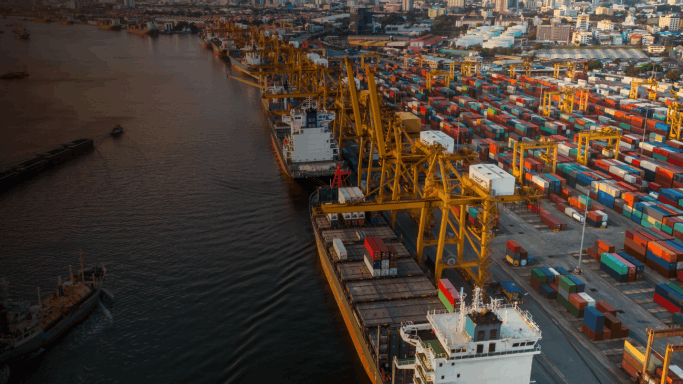
Indonesia’s export-import sector entered 2026 on a positive note, but businesses are facing increasingly integrated compliance requirements driven by digital systems. In the first half of 2026, Indonesia’s goods trade surplus reached USD 3.58 billion, as exports totaled USD 140.81 billion, up 4.13% from the same period a year earlier, while imports rose 18.69% to USD 137.24 billion.
On the compliance side, businesses are dealing not only with changes to tariffs and customs rules, but also with the growing integration of tax and customs administration systems. The Coretax rollout and its integration with the CEISA 4.0 customs system have increased the need for consistent data across trade documents and tax filings.
This environment requires companies to improve data governance and reconciliation processes. Discrepancies between export declaration form (pemberitahuan ekspor barang/PEB) or import declaration form (pemberitahuan impor barang/PIB) data and tax filings may increase the risk of an audit. Compliance should therefore be managed as part of the company’s broader risk management system, rather than treated as an administrative process after a transaction.
Industry Dynamics
Indonesia’s trade performance continues to be supported by primary commodities and manufactured products. In the first half of 2026, manufacturing exports grew 6.18%. The trade balance was also supported by a USD 19.35 billion non-oil and gas surplus, while the oil and gas sector recorded a USD 15.77 billion deficit. China remained the largest destination for non-oil and gas exports, accounting for 25.58% of the total, followed by the United States and India.
On the import side, raw materials and auxiliary materials were among the main drivers of import growth, contributing 13.15% to the increase. This growth reflects continued demand for domestic production inputs and the close link with manufacturing activity.
At the same time, companies need to adapt their business processes to an integrated customs system. The Directorate General of Customs and Excise has made the CEISA 4.0 system mandatory for all customs services.
Beyond digitalization, the policy on export proceeds from natural resources (devisa hasil ekspor sumber daya alam/DHE SDA) also affects exporters’ cash-flow management. The government issued Government Regulation (Peraturan Pemerintah/PP) Number 8 of 2025, amending PP Number 36 of 2023 on DHE SDA. The regulation governs how export proceeds are placed within the domestic financial system.
Businesses must factor these requirements into liquidity and working-capital planning, particularly for companies that rely on foreign currency to fund imports and supply-chain activities.
Industry-Specific Issue: Customs Valuation and Transfer Pricing
One central issue for multinational enterprises is the difference between customs valuation and transfer pricing approaches in related-party transactions.
These two areas can create different perspectives. From a customs standpoint, the value of an import transaction must reflect the appropriate value for determining import duties and import taxes. From a tax perspective, the purchase price must comply with the arm’s-length principle and should not erode Indonesia’s tax base.
The risk can become more pronounced when companies make year-end transfer pricing adjustments to comply with transfer pricing requirements under Minister of Finance Regulation (Peraturan Menteri Keuangan/PMK) Number 172 of 2023.
Such adjustments may affect the value of import transactions previously reported in PIBs. If a price adjustment creates a difference from the previously declared customs value, the company must assess whether it needs to amend relevant documents and whether it must pay additional customs liabilities.
Timing is particularly important here. Customs rules provide a 30-day period for voluntary amendments from the date the declaration is submitted. If a transfer pricing adjustment changes the customs value after this period, the company may face administrative consequences, including penalties that, under certain circumstances, can reach 1,000% of the underpaid import duty.
Management Priorities
Management needs to ensure that transfer pricing policies are developed in parallel with the customs valuation strategy from the pre-import stage, with clear procedures for reconciling transfer pricing adjustments against customs data.
Companies should also establish mitigation protocols for managing potential penalties and additional liabilities when year-end price adjustments occur.
Tax Risks
The complexity of export-import activities triggers several compliance risks that should be on management’s radar. Four major risks in this sector are transfer pricing disputes, DHE SDA compliance, VAT refunds, and discrepancies between data across government systems.
1. Transfer Pricing Disputes
Transfer pricing methodologies and comparable data require careful attention, as they can become sources of disagreement between taxpayers and tax auditors. PMK Number 172 of 2023 also places greater emphasis on documentation and evidence supporting the application of the arm’s-length principle.
Transfer pricing documentation should accurately reflect the actual circumstances and substance of the transactions. Any discrepancies between the documentation and the company’s operational reality may increase the adjustment risk by the tax authority.
2. Export Restrictions for Non-Compliance
Compliance with DHE SDA requirements can affect the smooth operation of exports. Under PP Number 8 of 2025, exporters must comply with requirements governing the placement of DHE SDA within the domestic financial system, including the prescribed amount and placement period.
Exporters that fail to meet these requirements may face suspension or blocking of customs services. Thus, companies should incorporate DHE SDA compliance into their operational and liquidity management. Restrictions on the use of export proceeds may affect working-capital needs and financing costs, which can, in turn, affect the company’s financial position and tax liabilities.
3. VAT Refund Audits
Exports of certain goods and services are subject to a 0% VAT rate, which can leave exporters with VAT overpayment and the option to claim a refund. VAT refund audit may include reviewing the validity of tax invoices, purchase transactions, the movement of goods, payment flows, and supporting export documentation.
Companies should ensure that their transaction records, PEBs, tax invoices, bookkeeping, and proof of payment from overseas customers are properly linked. Incomplete or inconsistent documentation may increase the risk of input VAT adjustments and reduce the refund ultimately granted.
4. Data Discrepancies Between Coretax and CEISA 4.0
Integrating tax and customs administration systems increases the need for consistent transaction data. Differences in free on board (FOB), cost, insurance, and freight (CIF) values, exchange rates, or harmonized system (HS) codes between customs documents and tax filings may trigger questions from the authorities.
Accordingly, companies should regularly reconcile customs-system data, bookkeeping, and tax filings. They should explain any discrepancies and support them with adequate documentation.
Governance and Organizational Readiness
Greater data integration and digital oversight require closer coordination among tax, finance, logistics, procurement, and international trade functions. Individual departments can no longer manage compliance in isolation.
Companies should establish a tax control framework (TCF) covering the transaction process from procurement through tax filing. They should translate this framework into standard operating procedures (SOPs), internal controls, and clear monitoring mechanisms.
Measures to consider include integrating transfer pricing parameters into invoicing and customs declaration processes, conducting regular reconciliations between the general ledger, PEB/PIB data, and tax filings, establishing procedures for handling transfer pricing adjustments after import transactions, systematically maintaining transaction documentation and the basis for tax calculations, and clearly allocating responsibilities among the tax, finance, logistics, and procurement functions.
Organizational readiness is not determined solely by documentation availability. Companies must also explain how commercial transactions, accounting records, customs documents, and tax filings connect.
How Tax Consultants Can Support
The complexity of cross-border transactions and the close relationship between tax and customs matters may require external expertise. Tax consultants can help companies identify risks, assess compliance, and develop strategies for resolving disputes.
Tax consultants can support companies in several areas. First, they can align transfer pricing and customs valuation. Consultants can conduct an alignment review to assess the consistency between transfer pricing policies and customs valuation, while also assisting with mandatory compliance documentation, including the master file, local file, and country-by-country report (CbCR). Reviewing these matters before transactions take place can help identify potential differences in approach between the tax and customs authorities.
Second, managing VAT refunds. A pre-filing compliance review can assess tax invoices, export documents, PEB-to-tax-return reconciliations, and other supporting documentation. This preparation helps companies respond to data requests and audits more systematically.
Third, resolving tax disputes. Consultants can help companies prepare responses to SP2DK requests, develop objection strategies, and support them throughout the dispute-resolution process under applicable regulations. The approach should be tailored to each company’s transaction profile, group structure, and tax and customs exposure.
If you need assistance or have inquiries regarding tax, transfer pricing, or customs in export-import activities, Ideatax is ready to help.
Also Read:
Tax Refunds Are a Right, Not a Fiscal Favor
What Is Tax in Indonesia?
Breaking Down the Article 21 Withholding Tax Provisions