
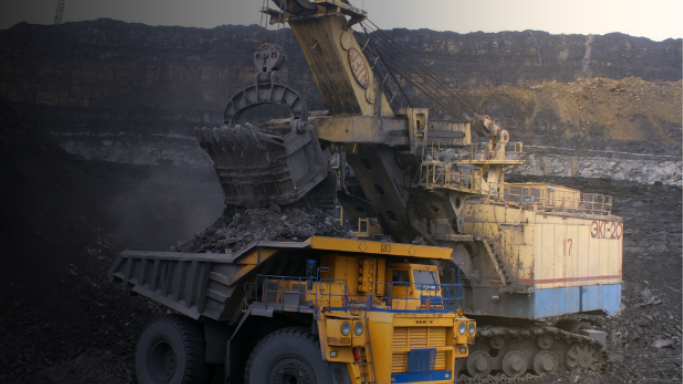
The Ministry of Energy and Mineral Resources reported that national coal output reached approximately 790 million metric tons in 2025, scaling back from the 836 million tons recorded in 2024. Of this output, roughly 514 million tons (65.1%) were exported, while 254 million tons (about 32%) were absorbed domestically. Power generation, cement, fertilizer, and major national strategic industries primarily drive local consumption.
In response to global oversupply conditions that took hold in 2024 and are projected to linger through 2026, Minister of Energy and Mineral Resources Bahlil Lahadalia announced plans to dial back the 2026 production target to roughly 600 million tons. The policy intervention intends to stabilize market prices while safeguarding national coal reserves.
Global market dynamics have already weighed heavily on export performance. According to Statistics Indonesia, coal export values plummeted 19.70% year-on-year to USD 24.48 billion in 2025, even as export volumes saw a milder decline of 3.66% to 390.93 million tons. The widening gap between revenue contraction and physical volume accentuates weakening global commodity prices as the primary drag on export receipts.
Conversely, domestic coal sales grew 6% to reach 246.8 million tons in 2025. Rising national energy consumption offset cooling demand from major trade partners like China and India.
Because swings in commodity pricing and sales volumes directly impact both corporate balance sheets and state coffers, evaluating the evolution of Indonesia's fiscal regulation shift for the coal sector is paramount.
The Policy Evolution of VAT on Coal
Under the original 1983 Value-Added Tax (VAT) Law, coal was classified as a taxable good (barang kena pajak/BKP) based on the negative list principle, which deems all goods and services taxable unless explicitly exempted.
The treatment shifted under Law of the Republic of Indonesia Number 42 of 2009 as the third amendment to the VAT Law. Article 4A, Paragraph 2(a) reclassified raw, unprocessed mining products, including coal before briquetting, as BKP. While this rule was active, coal lost its BKP status, preventing mining companies from crediting input VAT incurred on their operational purchases.
A decade later, Law of the Republic of Indonesia Number 11 of 2020 concerning Job Creation reversed this stance. Effective November 2, 2020, coal was removed from the list of exempt mining products, restoring its BKP classification and subjecting its delivery to standard VAT.
Law of the Republic of Indonesia Number 7 of 2021 concerning the Harmonization of Tax Regulations (HPP Law) broadened this policy even further. By amending Article 4A, Paragraph 2, of the HPP Law, the government eliminated the VAT exemption category for all extracted raw minerals. Consequently, coal, alongside nickel, tin, and bauxite, became fully classified as taxable goods.
Surging Mining Sector VAT Refunds

Restoring coal's BKP status triggered major fiscal ripple effects. Under Article 9, Paragraph 2(a), of the VAT Law, taxable entrepreneurs (pengusaha kena pajak/PKP) are entitled to credit input VAT paid on operational expenses against output VAT collected on sales.
However, because the vast majority of coal is exported, and exports are subject to a 0% VAT rate, exporters routinely pay far more input VAT than the output VAT they collect. The mismatch generated a massive surge in VAT refund claims across the extractive sector.
Director General of Taxes Bimo Wijayanto noted that the spike in mining refunds during Q2-2025 put severe pressure on net state tax revenues amid broader commodity price volatility. In January 2025, net tax receipts contracted by 41.9% year-on-year, driven significantly by elevated refund payouts to mining companies.
This fiscal drag has renewed debate over the current VAT framework. Before 2021, VAT refunds were virtually non-existent in the coal industry due to coal's non-BKP status.
The CCoW Regime
Beyond VAT, corporate income taxation in the coal sector features unique mechanics, particularly for companies operating under coal contracts of work (CCoW).
A CCoW is a long-term agreement negotiated directly between the Indonesian government and a local corporate entity. Derived from the traditional contract of work (CoW) used in mineral mining, CCoWs establish specific fiscal rights and obligations, including corporate income tax rates that remain fixed for the duration of the contract (typically 30 years).
The defining feature of the historic CCoW regime is the nailed-down principle. Under this doctrine, applicable tax types and rates for CoW/CCoW holders are locked in at the time of contract execution and remain immune to subsequent legislative changes throughout the contract term.
This principle was anchored in Article 33A, Paragraph 4, of Law of the Republic of Indonesia Number 7 of 1983 concerning Income Tax as amended by Law of the Republic of Indonesia Number 10 of 1994. The rule applied strictly to the contractual relationship between the government and the primary CCoW/CoW holder, not to third-party vendors.
For example, many early-generation CCoWs locked in corporate income tax rates as high as 45%, well above the current general rate of 22%. Nevertheless, this rate lock applies exclusively to the direct fiscal obligations between the state and the primary CCoW holder. Any commercial transactions with third parties remain subject to general statutory tax laws.
A CCoW holder withholding Article 23 income tax on contractor services had to follow prevailing statutory rates rather than CCoW terms, a rule reaffirmed under Minister of Finance Regulation Number 39/PMK.011/2013 concerning the Obligation to Withhold and/or Collect Income Tax Payable by Third Parties Contracted under Production Sharing Contracts, Contracts of Work, or Mining Business Cooperation Agreements.
Post-Minerba Law Shifts

The fiscal architecture underwent another major shift following Law of the Republic of Indonesia Number 3 of 2020 concerning Amendments to Law of the Republic of Indonesia Number 4 of 2009 concerning Mineral and Coal Mining (Minerba Law). Under this legislation, CCoW holders reaching contract expiration must transition to a Special Mining Business License (Izin Usaha Pertambangan Khusus/IUPK) as a Continuation of Operations.
This reclassification carries direct consequences for a company's applicable tax regime. To codify these rules, the government issued Government Regulation Number 15 of 2022 concerning Tax Treatment and/or Non-Tax State Revenues in the Mineral and Coal Mining Business. This regulation governs the tax treatment for holders of standard Mining Business License (Izin Usaha Pertambangan/IUP), IUPKs, IUPK as a Continuation of Operations, and legacy CCoWs.
Government Regulation Number 15 of 2022 introduces a hybrid fiscal framework for IUPK as a Continuation of Operations, combining locked-in and variable obligations. Commitments locked under the nailed-down doctrine include fixed fees, production-based non-tax state revenue (penerimaan negara bukan pajak/PNBP), corporate income tax, land and building tax, forestry and environmental PNBP, and the mandatory PNBP profit split, allocated at 4% to the central government and 6% to regional authorities.
Meanwhile, dynamic obligations follow general prevailing tax laws as they evolve. These include general PNBP categories, third-party tax withholding and collection, VAT, luxury-goods sales tax, carbon tax, stamp duty, customs duties, excise, and regional levies.
VAT Policy Evaluation
Indonesia’s coal VAT framework has come full circle, moving from BKP to non-BKP and back to BKP under the Law of the Republic of Indonesia Number 11 of 2020 concerning Job Creation and the HPP Law.
While categorizing coal as a BKP established equal tax treatment across all extractive commodities, it also exposed state coffers to substantial VAT refund demands, particularly throughout 2025 when coal prices and export volumes experienced pressure.
As global coal prices remain volatile and production targets decline heading into 2026, policymakers face the challenge of refining the VAT policy design. The goal moving forward is to establish a resilient tax structure that protects state revenues without saddling the government with unsustainable refund burdens during commodity price troughs.
Legal Basis:
- Law of the Republic of Indonesia Number 8 of 1983 concerning Value-Added Tax on Luxury-Goods Sales Tax as amended by Law of the Republic of Indonesia Number 7 of 2021 concerning Harmonization of Tax Regulations.
- Law of the Republic of Indonesia Number 11 of 2020 concerning Job Creation.
- Law of the Republic of Indonesia Number 7 of 1983 concerning Income Tax as amended by Law of the Republic of Indonesia Number 7 of 2021 concerning Harmonization of Tax Regulations.
- Law of the Republic of Indonesia Number 4 of 2009 concerning Mineral and Coal Mining as amended by Law of the Republic of Indonesia Number 3 of 2020.
- Government Regulation Number 15 of 2022 concerning Tax Treatment and/or Non-Tax State Revenues in the Mineral and Coal Mining Business.
- Minister of Finance Regulation Minister of Finance Regulation Number 39/PMK.011/2013 concerning the Obligation to Withhold and/or Collect Income Tax Payable by Third Parties Contracted under Production Sharing Contracts, Contracts of Work, or Mining Business Cooperation Agreements.
Also Read:
The Chart of Accounts for Coretax Reporting
Article 26 Withholding Tax on Foreign Taxpayers
PFII Bill Passed, Government Prepares Tax Incentives to Attract Foreign Investment