
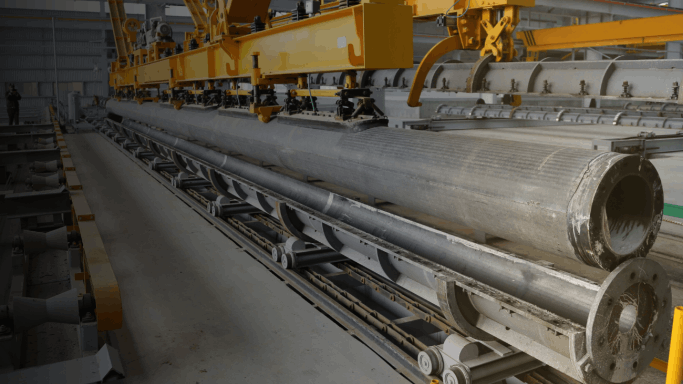
The government has raised concerns over potential tax revenue leakage in the iron and steel sector. Ministry of Finance estimates potential state losses of IDR 4 trillion to IDR 5 trillion involving 40 steel companies under scrutiny.
Meanwhile, the Directorate General of Taxes (DGT) has so far secured IDR 326.60 billion in tax revenue from audits of 38 companies as of August 26, 2026. The gap between the potential and realized revenue reflects ongoing tax enforcement processes..
Steel Industry Landscape
The Indonesian Iron and Steel Industry Association (IISIA) projects national steel consumption to reach 18.3 million tons in 2025 (growth 3.8% from previous year). The value of steel product consumption is estimated at around IDR 200 trillion, while production is valued at more than IDR 100 trillion and export earnings are approaching IDR 100 trillion.
However, capacity utilization in Indonesia’s steel industry remains below 60%. In some production lines, utilization is only around 20% to 40%. This is partly driven by high steel imports, particularly from China and Vietnam. Imports account for around 40.55% of national demand, equivalent to approximately IDR 80 trillion annually.
Some imported products have also been linked to dumping, tariff circumvention, and customs value manipulation through underinvoicing.
From a tax perspective, economic activity in the steel sector creates a substantial tax base. Transactions throughout the value chain have the potential to generate value added tax (VAT). In addition, upstream steel companies are appointed as collectors of Article 22 Income Tax at 0.3% of the VAT tax base on domestic sales of manufactured products.
The dominance of imports and pressure on domestic producers could reduce the profitability of local companies. This, in turn, could shrink the corporate income tax and Article 22 Income Tax bases.
IDR 326.60 Billion Secured
Finance Minister Purbaya Yudhi Sadewa said potential tax leakage of IDR 4 trillion to IDR 5 trillion had been identified among 40 steel companies. Most of these companies are foreign-invested enterprises.
During one inspection, the government found that one company had potential outstanding tax liabilities of IDR 1 trillion accumulated over three years of operations. As a follow-up, the DGT audited 38 of the 40 companies. As of August 26, 2026, the tax authority had secured IDR 326.60 billion in revenue.
| DGT Enforcement Function | Realized Revenue (IDR billion) | Taxpayer Status |
| Preliminary Evidence Examination | 224.19 | 11 taxpayers disclosed the incorrectness of their conduct; 8 taxpayers are still being processed; 1 taxpayer has been proposed for a tax investigation |
| Supervision | 96.08 | 16 taxpayers made direct payments; 3 taxpayers remain under active supervision |
| Tax Audit | 6.33 | 13 taxpayers made payments based on Tax Assessment Letters (SKP) |
| Total | 326.60 | 14 taxpayers are in the case-building stage; 1 taxpayer has been proposed for a preliminary evidence examination |
Source: DGT, processed
The IDR 326.60 billion in realized revenue does not yet reflect the full potential revenue. Some taxpayers are still undergoing preliminary evidence examinations and case building.
Part of the revenue came from taxpayers who used the mechanism for disclosing the incorrectness of their conduct under Article 8 Paragraph (3) of the the General Provisions and Procedures of Taxation Law (KUP Law) to avoid criminal sanctions.
The DGT has also expanded its tracing of transactions across the supply chain. The effort generated an additional IDR 380.50 billion from 485 related taxpayers and IDR 118.18 billion from 20 other steel-sector taxpayers. This brought total revenue from the intervention to IDR 825.28 billion.
Non-Compliance Practices and Mitigation
DGT audits have identified several patterns of non-compliance, including:
- Unreported cash sales. Transactions are not recorded to conceal revenue and reduce corporate income tax and Article 22 Income Tax liabilities.
- Sales without Tax Invoices. Transactions are not reported, resulting in VAT not being properly accounted for.
- Use of fictitious Tax Invoices. Fictitious invoices are used to inflate Input VAT, thereby reducing the amount of underpaid VAT.
- Use of third-party or nominee accounts. Customers are directed to make payments directly to suppliers, leaving local companies to act merely as intermediaries in recording transactions without an appropriate margin.
On the customs side, steel imports have also been found to involve underinvoicing. Such practices can reduce import duties, import VAT, and Article 22 Income Tax on imports, while putting downward pressure on steel prices in the domestic market.
The government can strengthen mitigation efforts through the Core Tax Administration System (Coretax). Integrating e-Faktur with Coretax allows transactions to be monitored in a more integrated manner.
The system can also help detect transaction discrepancies, such as large purchases that are not followed by recorded sales supported by Tax Invoices. This would enable risk- and transaction data-based supervision.
Fiscal Stimulus for the Steel Industry
Tax enforcement needs to be accompanied by fiscal policies that support compliant steel companies. Relevant instruments include Anti-Dumping Import Duties (BMAD), super tax deduction, relaxation of Article 22 Income Tax on imports, as well as tax holiday and tax allowance facilities.
Anti-Dumping Import Duties
The government uses BMAD to protect the domestic market from imported products proven to be subject to dumping practices. Under Minister of Finance Regulations (PMK) No. 31/PMK.010/2026 and No. 32/PMK.010/2026, the government imposed BMAD on certain hot rolled coil (HRC) steel products in addition to Most-Favored Nation (MFN) import duties.
BMAD can help reduce distortions caused by imports and provide domestic producers with greater room to improve capacity utilization.
Super Tax Deduction
The government provides super tax deduction facilities under Government Regulation (PP) No. 45 of 2019 to encourage vocational training, apprenticeships, and research and development. Companies that conduct vocational training, apprenticeships, or work-practice programs can receive a deduction from gross income of up to 200% of the costs incurred.
For research and development activities conducted in Indonesia that result in intellectual property rights and commercialization, the deduction from gross income can reach 300%. The incentive can be utilized by steel companies to improve workforce skills and develop production technologies.
Relaxation of Article 22 Income Tax on Imports
The 2.5% Article 22 Income Tax on imports for importers holding an Importer Identification Number (API) can affect the liquidity of companies that continue to import certain raw materials, such as high-quality metal scrap or anthracite.
The government could facilitate access to Exemption Certificates (SKB) for Article 22 Income Tax on imports of raw materials used for export-oriented activities or brought into Bonded Zones. Such a policy could reduce funds tied up as prepaid taxes.
Tax Holiday and Tax Allowance
Expanding production capacity in the upstream sector, including blast furnaces and supporting smelting facilities, requires substantial investment. The basic metals industry is among the sectors eligible for tax holiday and tax allowance facilities.
These incentives include reductions or exemptions from corporate income tax, net income deductions, accelerated depreciation, and loss carryforwards. Certainty and consistency in granting these incentives are important factors in maintaining the competitiveness of investment in Indonesia’s steel industry.
Conclusion
The potential tax leakage of IDR 4 trillion to IDR 5 trillion involving 40 steel companies needs to be viewed in the context of ongoing enforcement proceedings. As of August 26, 2026, the DGT had secured IDR 326.60 billion from 38 companies under audit.
Non-compliance practices include unreported cash transactions, sales without tax invoices, fictitious tax invoices, and the use of third-party accounts. Strengthening data-based supervision through Coretax is one measure that can help curb these practices.
Revenue optimization also needs to be accompanied by policies that maintain industry competitiveness. BMAD can be used to address dumping practices, while super tax deduction can encourage workforce and technology development. Relaxation of Article 22 Income tax on imports can support corporate liquidity, while tax holiday and tax allowance facilities can support new investment.
A combination of effective tax enforcement and well-targeted fiscal policies is needed to improve compliance while maintaining the sustainability of Indonesia’s steel industry.
Also Read:
Breaking Down the Article 21 Withholding Tax Provisions
Tax Refunds Are a Right, Not a Fiscal Favor
Article 26 Income Tax: Withholding Tax on Foreign Taxpayers in Indonesia