
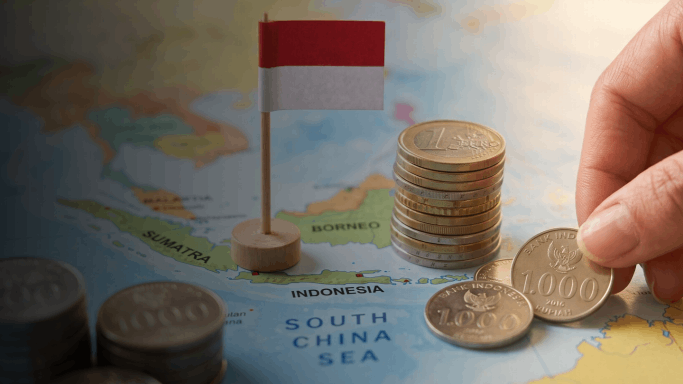
At the House of Representatives’ plenary assembly on August 14, 2026, President Prabowo Subianto presented the Draft State Budget and Financial Note for Fiscal Year 2027. The government has set the theme for the 2027 Draft State Budget as “Higher Economic Growth and Faster Prosperity”.
The government targets state revenue of IDR 3,426 trillion in 2027, up 6.8% from the 2026 state budget outlook of IDR 3,208.1 trillion. This target is equivalent to approximately 12.2% of gross domestic product (GDP).
State expenditure is proposed at IDR 4,097.2 trillion, up 3.9% from the 2026 state budget outlook. With this fiscal stance, the 2027 budget deficit is projected at IDR 671.2 trillion, or 2.40% of GDP. The figure is lower than the 2026 state budget deficit outlook of 2.68% of GDP.
2027 Draft State Budget Revenue Structure
According to the 2027 Draft State Budget Financial Note, state revenue of IDR 3,426.0 trillion will come from three main sources, including tax revenue, non-tax state revenue (penerimaan negara bukan pajak/PNBP), and grants.
Tax revenue is targeted at IDR 2,908 trillion in 2027, representing 10.5% growth from the 2026 outlook of IDR 2,631.4 trillion.
PNBP is targeted at IDR 517.4 trillion, down 10.0% from the 2026 outlook of IDR 575.1 trillion. Meanwhile, grants are projected at IDR 0.7 trillion, down 56.0% from the 2026 outlook of IDR 1.5 trillion.
Tax revenue comprises tax revenue administered by the Directorate General of Taxes (DGT), amounting to IDR 2,591.4 trillion, and customs and excise revenue administered by the Directorate General of Customs and Excise, amounting to IDR 316.6 trillion.
The government envisions higher tax revenue in 2027, driven by improved tax compliance, a broader tax base, greater use of the Coretax system, optimization of natural resources, and targeted fiscal incentives.
| Component | 2027 Draft State Budget (Trillion IDR) | 2026 Outlook (Trillion IDR) | Growth |
| Tax Revenue | 2,591.4 | 2,310.8 | 12.1% |
| Customs and Excise | 316.6 | 320.6 | -1.2% |
| Tax Revenue | 2,908.0 | 2,631.4 | 10.5% |
| PNBP | 517.4 | 575.1 | -10.0% |
| Grants | 0.7 | 1.5 | -56.0% |
| Total State Revenue | 3,426.0 | 3,208.1 | 6.8% |
Source: 2027 Draft State Budget Financial Note, Ministry of Finance (2026), compiled.
Tax Revenue Breakdown
The IDR 2,591.4 trillion tax revenue target in the 2027 draft state budget consists of several major tax categories. Income tax revenue is targeted at IDR 1,277.7 trillion, representing 9.87% growth from the 2026 outlook. Income tax remains the largest source of tax revenue.
Value-added tax (VAT) and luxury-goods sales tax revenue is targeted at IDR 1,126.1 trillion, up 13.37% from the 2026 outlook. This growth is supported by projected improvements in consumption and economic activity, as well as an expanded VAT collection base, including digital economy transactions.
Land and building tax revenue is targeted at IDR 28.6 trillion, representing 3.62% growth from the 2026 outlook. Meanwhile, other taxes, including stamp duty, are targeted at IDR 159 trillion, up 25.3%.
For customs and excise revenue, excise revenue is targeted at IDR 235.3 trillion, up 0.38% from the 2026 outlook. Import duty revenue is targeted at IDR 54.5 trillion, up 2.64%, while export duty revenue is projected to decline 19.03% to IDR 26.8 trillion.
| Revenue Type | 2027 Draft State Budget (Trillion IDR) | Growth From 2026 Outlook |
| Income Tax | 1,277.7 | 9.87% |
| VAT and Luxury-Goods Sales Tax | 1,126.1 | 13.37% |
| Land and Building Tax | 28.6 | 3.62% |
| Other Taxes (Including Stamp Duty) | 159 | 25.3% |
| Excise | 235.3 | 0.38% |
| Import Duties | 54.5 | 2.64% |
| Export Duties | 26.8 | -19.03% |
Source: 2027 Draft State Budget Financial Note, Ministry of Finance (2026), compiled.
Tax Revenue Trends
Tax revenue growth has slowed in recent years after strong increases in 2021 and 2022, before contracting in 2025. After the COVID-19 pandemic, tax revenue initially grew strongly. In 2021, realized tax revenue reached IDR 1,278.63 trillion, growing 19.3% from 2020. In 2022, revenue rose to IDR 1,716.77 trillion, up 34.3%, partly supported by high global commodity prices.
In 2023, tax revenue reached IDR 1,869.23 trillion, growing 8.9%. Growth slowed to 3.46% in 2024, with realized revenue reaching IDR 1,932.4 trillion. In 2025, tax revenue fell to IDR 1,917.6 trillion, down about 0.8%.
For 2026, tax revenue is projected at IDR 2,310.8 trillion, or 98% of the 2026 state budget target of IDR 2,357.7 trillion, implying a potential shortfall of IDR 46.9 trillion.
This suggests the 2027 target requires tax revenue to increase by 12.1% from the 2026 outlook. The target follows a contraction in tax revenue in 2025, while the 2026 outlook remains below the state budget target.
The tax ratio is another noteworthy factor. Tax revenue as a share of GDP stood at around 9.31% in 2025. The figure indicates that nominal revenue growth has not fully matched growth in tax collection capacity relative to the size of the economy. Accordingly, broadening the tax base will be an important factor in achieving the 2027 target.
| Year | Tax Revenue (Trillion IDR) | Growth |
| 2021 | 1,278.63 | 19.3% |
| 2022 | 1,716.77 | 34.3% |
| 2023 | 1,869.23 | 8.9% |
| 2024 | 1,932.4 | 3.46% |
| 2025 | 1,917.6 | -0.8% |
| 2026 (Outlook) | 2,310.8 | 20.5% |
| 2027 (Draft State Budget) | 2,591.4 | 12.1% |
Source: Ministry of Finance and Directorate General of Taxes, compiled.
Tax Revenue Challenges in 2027
Achieving the 2027 tax revenue target requires 12.1% growth from the 2026 outlook. The government faces several challenges in reaching this target.
First, broadening the tax base. A declining or stagnant tax ratio indicates that higher tax revenue cannot rely solely on economic growth. The tax administration system needs to expand its taxpayer base, particularly in the informal sector, the shadow economy, and economic activities not yet fully identified.
Second, the budget depends on commodity prices and macroeconomic assumptions. The 2027 draft state budget is based on an economic growth assumption of 6% and an Indonesia’s crude price (ICP) assumption of USD 75 per barrel. If these assumptions are not met, revenue from commodity sectors such as coal, palm oil, and metallic minerals could come under pressure. The 19.03% reduction in the export duty target to IDR 26.8 trillion illustrates this risk.
Third, the Coretax system's further development. The Coretax administration system rollout since early 2025 is expected to fortify the tax database and taxpayer compliance monitoring. However, its effectiveness will depend on data quality, integration with third-party data, and the tax administration’s ability to use the data for compliance monitoring.
Fourth, the realism of the target. Differences between alternative projections and the government’s target indicate that achieving the 2027 target will depend on economic growth, the effectiveness of tax administration reforms, and tax base expansion.
To address these challenges, the government and the DGT should enhance data quality and information systems by leveraging Coretax and artificial intelligence. Furthermore, the government needs to amplify public services and trust, improve monitoring of high-income individual and corporate group taxpayers, and strengthen law enforcement through a multi-door approach.
The DGT has also proposed an indicative budget of IDR 5.4 trillion to the Commission XI of the House of Representatives for activities intended to optimize tax revenue in 2027. The 2027 draft state budget tax revenue target of IDR 2,591.4 trillion reflects the government’s efforts to boost fiscal capacity through higher revenue and a broader tax base.
The target requires 12.1% growth from the 2026 outlook, while tax revenue contracted in 2025 and the 2026 outlook remains below the state budget target. As a result, achieving the 2027 target will depend on improved compliance, a broader tax base, higher data quality, and Coretax effectiveness. For taxpayers, this policy direction means that tax oversight will become increasingly data-driven and integrated.
Businesses need to ensure data quality and formal and material compliance to prepare for more intensive tax monitoring. The success of the 2027 draft state budget will eventually depend on the government’s ability to translate economic potential into sustainable state revenue.
References
- Ministry of Finance of the Republic of Indonesia. (2026). Financial Note and Draft State Budget for Fiscal Year 2027.
- Directorate General of Taxes. (2024). 2023 Tax Revenue Statistics in Figures.
- Ministry of Finance of the Republic of Indonesia. (2026). 2027 Draft State Budget Publications and Press Conference Materials.
- Directorate General of Economic and Fiscal Strategy, Ministry of Finance. (2026). Deliberation and Policy Direction for the 2027 Draft State Budget.
Also Read:
Tax Refunds Are a Right, Not a Fiscal Favor
What Is Tax in Indonesia?
Breaking Down the Article 21 Withholding Tax Provisions