
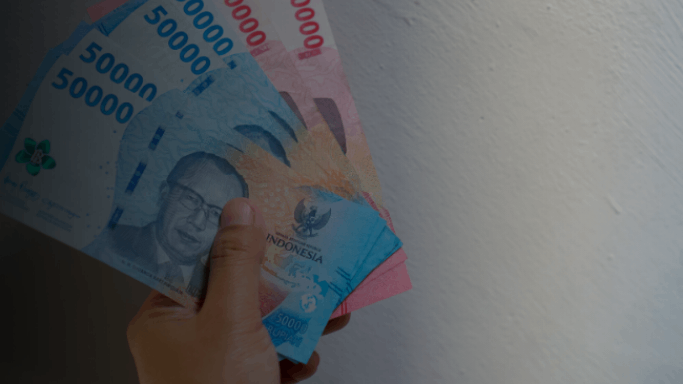
Finance Minister Purbaya Yudhi Sadewa said tax revenue had continued to grow in recent months despite the government not raising tax rates. He said the growth underscored the importance of improving tax collection efficiency and compliance.
“Under the current conditions, we can succeed if we improve tax collection efficiency. Over the past seven to eight months, tax revenue has grown even though I have not raised tax rates, but I have made sure that people are working under good conditions,” Purbaya said in a Finance Ministry press statement, as quoted here Saturday (Aug. 29, 2026).
Purbaya said the government would strengthen state revenue by improving compliance, expanding the tax base, strengthening the Coretax system, optimizing natural resources, and providing targeted fiscal incentives to encourage investment.
“Second, if the economy grows faster, even with the same level of tax collection, tax revenue will still increase,” he said.
2027 State Budget Draft Tax Revenue Target
During a meeting of the House of Representatives (DPR) Budget Committee (Banggar) on the First-Level Discussion of the 2027 State Budget Bill in Jakarta on Thursday (Aug. 27, 2026), Purbaya said the government was targeting state revenue of IDR 3,426 trillion in the 2027 State Budget Draft, up 6.8% from the 2026 outlook, equivalent to 12.23% of gross domestic product (GDP).
The revenue target consists of IDR 2,908 trillion in tax revenue, IDR 517.4 trillion in non-tax state revenue (PNBP), and IDR 0.7 trillion in grants. Tax revenue is targeted at IDR 2,591.4 trillion, while customs and excise revenue is projected at IDR 316.6 trillion.
The tax revenue-to-GDP ratio is targeted at 10.38% in 2027. The government will pursue the target through tax reforms and increased economic activity.
Purbaya said optimizing revenue would not rely solely on changes in tax rates. The government would expand the tax base by utilizing data, improving compliance, and strengthening tax services.
“Improving compliance is key to optimizing revenue through the use of technology, stronger inter-agency coordination, and more effective law enforcement,” Purbaya said.

The strategy includes tax extensification and intensification. The expansion of the tax base will be supported by greater use of data, while voluntary compliance will be encouraged through simpler and more accessible tax services.
Tax law enforcement will also be strengthened while upholding the principle of fairness. The government considers improving the capacity of tax officials an important part of efforts to enhance tax collection.
Beyond tax reform, economic growth will be an important factor in increasing revenue. The greater the level of economic activity, the broader the tax base that the government can collect from.
2027 State Budget Draft Spending
On the expenditure side, the government has allocated IDR 4,097.2 trillion in the 2027 State Budget Draft, up 3.9% from the 2026 state spending outlook.
State expenditure consists of IDR 3,362.2 trillion in central government spending and IDR 735 trillion in transfers to regions.
Central government spending will be directed toward improving spending quality while maintaining public services, household purchasing power, and the implementation of development programs.
Meanwhile, transfers to regions will focus on improving the quality of regional budget management, promoting more equitable development, and supporting sustainable regional development.
The government believes higher revenue must go hand in hand with improved spending quality to ensure the budget contributes to economic growth and public welfare.
2027 State Budget Draft Deficit
With state revenue of IDR 3,426 trillion and expenditure of IDR 4,097.2 trillion, the 2027 State Budget Draft records a deficit of IDR 671.2 trillion.
The deficit is equivalent to 2.40% of GDP.
The government will manage financing in a measured manner while taking into account the deficit and debt ratio. It will also diversify financing sources to meet budget needs while maintaining stability in the government bond market.
“With these policies, the 2027 State Budget Draft will remain expansionary but measured, with a deficit of 2.40% of GDP, enabling the state budget to support growth while maintaining fiscal sustainability,” Purbaya said.
“We will diversify our financing. We will diversify to maintain the funding of our government bond financing. We can still maintain stability, and I can maintain better stability in government bonds, which means greater economic stability as well,” Purbaya said.
2027 State Budget Draft Macroeconomic Assumptions
The 2027 State Budget Draft was prepared against a backdrop of global economic conditions that continue to face risks and uncertainty. The government will continue to use the state budget as an instrument to maintain stability and support domestic economic growth.
The government has set economic growth at 6% as an assumption for the 2027 State Budget Draft. Inflation is projected at 2.5%, while the assumed interest rate for 10-year government securities (SBN) is 6.9%.
The rupiah exchange rate is assumed at IDR 17,500 per US dollar. The Indonesian Crude Price (ICP) is set at US$75 per barrel.
Meanwhile, oil lifting is targeted at 610,000 barrels per day, while gas lifting is targeted at 954,000 barrels of oil equivalent per day.
The 2027 State Budget Draft also sets development and public welfare targets. The poverty rate is targeted at 6.0-6.5%, lower than the 2026 target of 6.5-7.5%. The open unemployment rate is targeted at 4.30-4.87%, compared with the 2026 target of 4.44-4.96%.
The government also aims to improve income distribution, with the Gini ratio targeted at 0.362-0.367. This is lower than the 2026 target of 0.377-0.380. The human capital index is targeted to increase to 0.575.
2027 State Budget Draft Priorities
The preparation of the 2027 State Budget Draft also takes into account national economic conditions in the second quarter of 2026. The government considers domestic fiscal, monetary, and financial sector conditions to remain stable despite continued global economic pressures.
Several strategic sectors have been prioritized in the budget, particularly programs with high multiplier effects. These include food security, downstreaming, and human resource development.
The government will also maintain fiscal policy flexibility to respond to changes in global conditions and risks to the national economy.
With revenue of IDR 3,426 trillion, expenditure of IDR 4,097.2 trillion, and a deficit equivalent to 2.40% of GDP, the 2027 State Budget Draft is aimed at supporting economic growth while maintaining fiscal sustainability.
Also Read:
Breaking Down the Article 21 Withholding Tax Provisions
Tax Refunds Are a Right, Not a Fiscal Favor
Article 26 Income Tax: Withholding Tax on Foreign Taxpayers in Indonesia
