
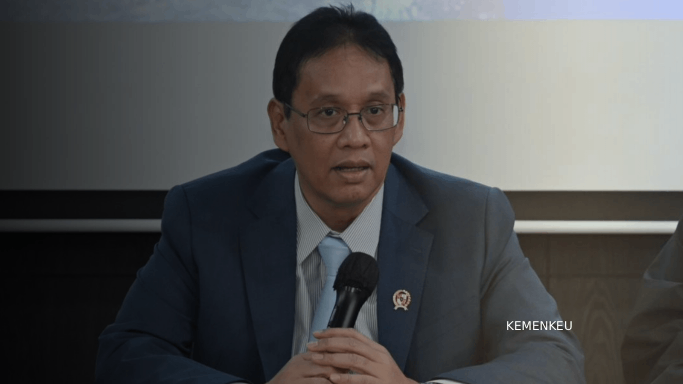
Finance Minister Purbaya Yudhi Sadewa has emphasized that state budget (APBN) management should not focus solely on budget absorption but also deliver tangible benefits to the public.
“Every rupiah of the state budget must continue to work, not merely be recorded as a realization figure, but truly deliver tangible benefits to the public,” Purbaya said in a statement during his visit to the West Java Regional Office of the Directorate General of Treasury (DJPb) in Bandung on Monday (Aug. 24, 2026).
Purbaya said the state budget in West Java should be reflected in economic activity, business support, development, and improvements in public welfare.
“We want to ensure that the state budget in West Java does not stop at budget absorption reports, but is reflected in economic activity, business support, development, and improved public welfare,” he said.
He also called for state budget funds to be managed optimally and targeted appropriately to support economic growth at both the regional and national levels.
“What we want to ensure is that state budget funds are managed optimally, targeted appropriately, and able to serve as a catalyst for economic growth at both the regional and national levels,” he said.
West Java State Budget Records IDR 22.02 Trillion Surplus
Data from the West Java Regional Office of the Directorate General of Treasury showed that as of July 31, 2026, the state budget in West Java recorded a regional surplus of IDR 22.02 trillion. State revenue reached IDR 85.61 trillion, or 45.41% of the target, growing 6.81% from the same period last year.
Tax revenue reached IDR 81.30 trillion, up 7.35% year on year. This comprised tax revenue of IDR 63.84 trillion, which rose 10.41%, and customs and excise revenue of IDR 17.46 trillion.
The manufacturing sector was the largest contributor to tax revenue, accounting for IDR 30.60 trillion, or 47.93% of total tax revenue. On the expenditure side, state budget realization reached IDR 63.59 trillion, or 57.02% of the allocated budget. State spending fell 1.45% year on year.
Spending by ministries and agencies, however, grew 28.86% to IDR 26.61 trillion, equivalent to 53.53% of the allocation. The increase was driven partly by capital expenditure, which reached IDR 3.11 trillion, up 115.37% from July 2025 to support infrastructure development and public service facilities.
Meanwhile, realization of Transfers to Regions (TKD) and Village Funds reached IDR 36.98 trillion, or 59.82% of the allocation. This comprised IDR 35.46 trillion in TKD and IDR 1.52 trillion in Village Funds.
West Java Economy Grows 5.73%
West Java's economy grew 5.73% year on year in the second quarter of 2026. On a quarterly basis, the economy grew 2.25%. Growth was primarily driven by the manufacturing sector.
West Java's inflation rate stood at 2.72% year on year in July 2026. Meanwhile, the trade balance for January-July 2026 recorded a surplus of US$ 13.79 billion.
The performance underscores the role of the state budget in supporting economic activity and maintaining regional economic stability. Purbaya also highlighted the importance of budget management discipline, particularly in planning personnel spending.
He called for personnel spending needs to be planned from the beginning of the year to prevent budget shortfalls at the end of the year. Purbaya also reminded officials that shifting budget allocations to cover personnel spending needs should not reduce funding for programs that have a direct impact on the public, except in urgent circumstances.
Also Read:
Breaking Down the Article 21 Withholding Tax Provisions
Tax Refunds Are a Right, Not a Fiscal Favor
Article 26 Income Tax: Withholding Tax on Foreign Taxpayers in Indonesia
