
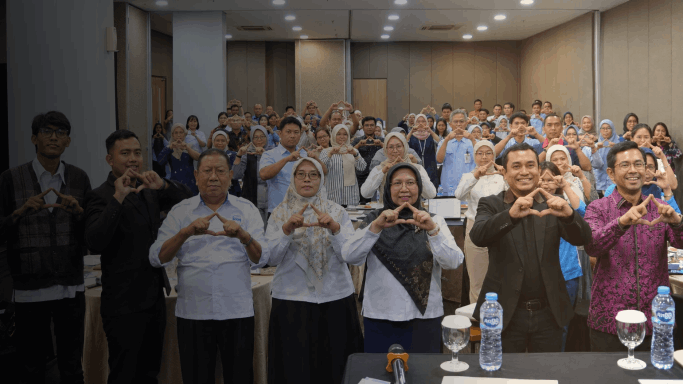
Ideatax and the Bekasi branch of the Indonesian Employers Association (Asosiasi Pengusaha Indonesia/Apindo) discussed global tax developments and their implications for businesses at a seminar titled “Navigating Indonesia’s Tax Landscape in a Global Business Environment” at Batiqa Hotel Jababeka, South Cikarang, on Thursday (Sept. 24, 2026). The discussion covered the implementation of the global minimum tax (GMT), transfer pricing, and tax compliance challenges facing companies operating in a cross-border business environment.
The seminar was attended by around 100 participants from companies and industrial businesses in Bekasi Regency. Ideatax Partner Arianta John Bangun and International Tax Practitioner Rendinta Delasnov Tarigan served as speakers.
Head of the Education, Training, and Productivity Division of the Bekasi Regency Apindo branch, Tetty Yanuarti, said the seminar was held to improve companies’ understanding of developments in global tax regulations.
According to Tetty, understanding changes in tax regulations has become increasingly important for Apindo members engaged in cross-border business activities. Some Apindo members are foreign investment companies with headquarters or parts of their business groups located outside Indonesia.
“We want to explain the new global tax rules, how to anticipate them, and how to implement them in the activities of the organizations where we work,” Tetty said.
In his presentation, Arianta described the GMT as one of the key developments in the international tax system. The rules concern the application of a minimum effective tax rate to multinational enterprise groups that meet certain criteria.
The GMT sets a minimum effective tax rate of 15%. One of the criteria that companies need to consider is consolidated group revenue of at least EUR 750 million during the relevant period.
“The global minimum tax ensures that the taxing rights of countries implementing the GMT are exercised at an effective tax rate of 15%,” Arianta explained.

If a group’s effective tax rate falls below 15%, a top-up tax liability may arise to meet the minimum threshold. In Indonesia, the GMT mechanism has applied since the 2025 tax year.
Companies therefore need to determine whether their business groups fall within the scope of the GMT. Among the factors that need to be assessed are the group’s consolidated revenue, ownership structure, and business activities.
Arianta also highlighted companies that have only one entity or subsidiary in Indonesia. Such structures still need to be considered if the Indonesian entity is part of a multinational group that meets the GMT criteria.
In addition to the GMT, transfer pricing was another issue discussed at the seminar. The topic is relevant to companies conducting transactions with related parties, particularly within business groups operating across multiple countries.
Companies need to understand the applicable rules and prepare the necessary documentation while applying transfer prices in line with the arm’s-length principle. This is important for managing tax risks that may arise from intercompany transactions within a group.
Developments in international tax rules also require companies to view tax obligations not merely in terms of tax payments, but as part of broader risk management and compliance efforts.

Tetty said companies need to understand tax regulations to fulfill their obligations while minimizing the risk of penalties.
“Taxation is not something to be feared. What matters is not only paying taxes, but also understanding and complying with the rules to avoid penalties,” Tetty said.
She said educational activities such as seminars provide Apindo members with an avenue to keep abreast of regulatory developments and understand how they apply to business activities.
In addition to seminars, Apindo provides supporting programs through the Apindo Employees Cooperative (Koperasi Karyawan Apindo/Kokapindo). These programs include tax brevet courses and partnerships with several tax consultants.
The programs can be used by members to improve their tax-related competencies and obtain assistance based on their companies’ needs.
Through collaboration with tax practitioners and consultants such as Ideatax, Apindo Bekasi encourages companies to keep up with developments in tax regulations, particularly rules relevant to cross-border business activities.
Also Read:
Tax Refunds Are a Right, Not a Fiscal Favor
What Is Tax in Indonesia?
Breaking Down the Article 21 Withholding Tax Provisions
