
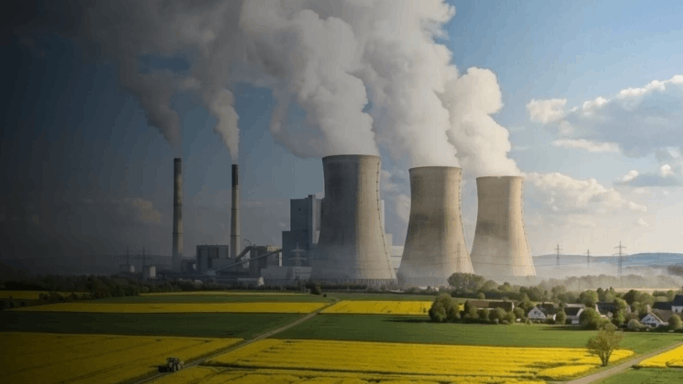
The Indonesian government is closely monitoring the European Union’s implementation of the Carbon Border Adjustment Mechanism (CBAM), which could increase costs for Indonesian products. The carbon tax imposed at the border targets products from carbon-intensive industries, including those that still rely on non-green energy sources.
Coordinating Minister for Economic Affairs Airlangga Hartarto said the government continues to monitor various trade policies adopted by trading partners that could create barriers to Indonesian exports. One area of concern is the EU’s policy of imposing carbon-related costs on imported products.
According to Airlangga, CBAM could affect industries with high levels of carbon emissions. The impact could also be felt by industries whose electricity supply does not yet come from green energy sources.
“CBAM will also apply to industries with relatively high carbon emissions, or industries whose electricity does not come from green energy. This is also one form of trade barrier being pushed by European countries,” Airlangga said in Jakarta on Tuesday (Oct. 6, 2026).
CBAM is one of the EU’s policies for accounting for the carbon emissions embedded in imported products. The mechanism could increase costs for exporters from countries that have yet to adopt comparable carbon standards or carbon pricing.
The government therefore needs to ensure that domestic industries are able to adapt to increasingly stringent trade requirements that take environmental considerations and carbon emissions into account.
In addition to carbon policies, the government is monitoring non-tariff barriers imposed by the EU on a number of Indonesian commodities, particularly plantation and forestry products. One such measure is the European Union Deforestation Regulation (EUDR). Airlangga said implementation of the regulation has again been postponed until next year.
“In the plantation and forestry sectors, we can see that non-tariff barriers from Europe are also being implemented, including what they call the EUDR. The EUDR has been pushed back again to next year, so international pressure has also delayed its implementation,” he said.
According to Airlangga, developments in these policies show that businesses face an increasing number of environmental requirements to maintain access to international markets.
Indonesia also faces trade challenges from the United States, particularly through policies concerning the global excess supply of steel, or Global Excess Steel. Airlangga said the policy is linked to US efforts to protect its domestic manufacturing industry. Steel is considered a strategic commodity because it is used for civilian needs as well as defense and space industries.
“One of the tariff barriers concerns global steel. Recently, the United States held an agenda on Global Excess Steel, where steel is considered a strategic commodity, particularly because it is used not only for civilian needs but also for military and space purposes,” he said.
The policy includes tariffs of up to 50% on foreign steel imports, including steel products from Indonesia. Airlangga said the development warrants the government’s attention as trade policies adopted by developed countries become increasingly diverse, ranging from import tariffs to environmental and carbon-emission requirements.
Amid changes in global trade policies, the government needs to strengthen the competitiveness of domestic industries while encouraging a transition toward lower-carbon production. Strengthening domestic industry is considered important to ensure that national producers can not only maintain export markets but also take advantage of domestic demand.
According to Airlangga, strengthening the domestic market can help boost production and create jobs.
“Besides that, we need to ensure that the domestic market can also be served by domestic producers, which is important for job creation and economic growth,” he said.
Also Read:
Tax Refunds Are a Right, Not a Fiscal Favor
What Is Tax in Indonesia?
Breaking Down the Article 21 Withholding Tax Provisions
