
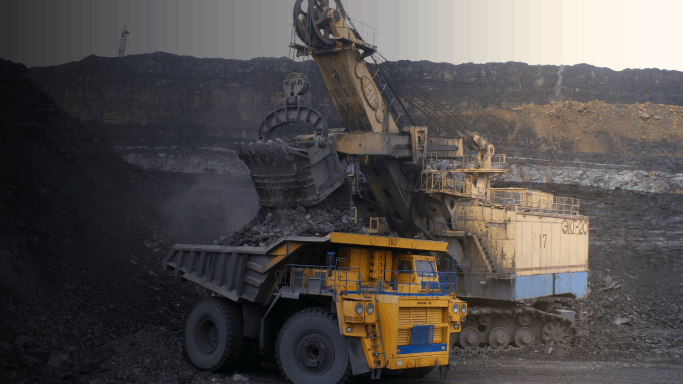
The mining sector plays a strategic role in Indonesia’s economy. In addition to serving as a source of foreign exchange and non-tax state revenue, mining activities also contribute to tax revenue through Income Tax, Value Added Tax (VAT), and Land and Building Tax (PBB). The industry’s capital-intensive nature, extensive operational areas, and substantial assets and infrastructure make it an important tax revenue base.
According to Statistics Indonesia’s (BPS) Official Statistical News (2026), Indonesia’s economy grew by 5.47% year-on-year (YoY) in the third quarter of 2026. Meanwhile, the mining and quarrying sector grew 0.91%, marking a recovery after contracting for four consecutive quarters.
This improvement was primarily driven by metal ore mining, which grew by 2.96%. Nevertheless, mining sector growth remained relatively limited compared with national economic growth and that of several other economic sectors.
From a taxation perspective, these developments are worth examining because mining tax revenue does not come solely from taxes on income and economic transactions. Land and Building Tax is also imposed on land and/or buildings used for mining activities. Unlike Income Tax, which is heavily influenced by corporate profitability, Land and Building Tax is assessed based on the existence, area, use, and value of the taxable object.
Mining Sector Land and Building Tax Revenue
Under the central government's Land and Building Tax structure, there are six categories of tax objects: plantation, forestry, oil and gas mining, geothermal mining, mineral and coal mining, and other sectors (collectively referred to as PBB-P5L).
Based on the 2022 and 2023 Central Government Financial Reports (LKPP), Land and Building Taxrevenue from mineral and coal mining increased from approximately IDR 5.29 trillion in 2022 to IDR 11.49 trillion in 2023. Meanwhile, Land and Building Tax revenue from oil and gas mining rose from around IDR 13.71 trillion to IDR 17.19 trillion. Geothermal Land and Building Tax also increased from approximately IDR 490.71 billion to IDR 618.22 billion (BPK, 2023). Thus, when these three revenue categories are combined, total mining sector Land and Building Tax revenue rose from around IDR 19.49 trillion in 2022 to IDR 29.30 trillion in 2023.
According to the 2024 LKPP, Land and Building Tax revenue from mineral and coal mining was recorded at IDR 11.47 trillion, remaining relatively stable compared to the previous year. Conversely, oil and gas mining sectorLand and Building Tax revenue declined to IDR 15.87 trillion, while geothermal Land and Building Tax fell to IDR 534 billion. Overall, these three categories generated approximately IDR 27.87 trillion in revenue (BPK, 2025).
Based on the audited 2025 LKPP, total Land and Building Tax actual revenue was recorded at IDR 29.27 trillion, down from the 2024 realization of IDR 32.49 trillion. However, these figures represent total Land and Building Tax revenue across all sectors rather than mining sector Land and Building Tax specifically.
| Year | Mineral and Coal Land and Building Tax | Oil and Gas Land and Building Tax | Geothermal Land and Building Tax |
|---|---|---|---|
| 2022 | IDR 5.29 Trillion | IDR 13.71 Trillion | IDR 0.49 Trillion |
| 2023 | IDR 11.49 Trillion | IDR 17.19 Trillion | IDR 0.62 Trillion |
| 2024 | IDR 11.47 Trillion | IDR 15.87 Trillion | IDR 0.53 Trillion |
Source: LKPP 2022, LKPP 2023, LKPP 2024, and LKPP 2025. Figures are in trillions of rupiah.
Land and Building Tax revenue is not entirely determined by commodity prices or corporate profitability. In the mining sector, assessing the Tax Object Sale Value (Nilai Jual Objek Pajak/NJOP) of production-operation subsurface areas may consider net production revenue and a capitalization factor. However, Land and Building Tax also covers land surfaces, pre-production areas, productive areas, supporting facilities, and buildings used for business activities.
Consequently, a decline in commodity prices does not automatically eliminate Land and Building Tax obligations. This makes Land and Building Tax one of the state revenue instruments with a relatively sustainable tax base compared with taxes that depend heavily on corporate profits.
Legal Framework for Mining Sector Land and Building Tax
Mining sector Land and Building Tax is part of the central government-administered Land and Building Tax framework under the authority of the Directorate General of Taxes (DGT). Its primary legal basis is Law Number 12 of 1985 concerning Land and Building Tax, as amended by Law Number 12 of 1994. Subsequently, Law Number 1 of 2022 concerning Financial Relations between the Central Government and Regional Governments stipulates that Rural and Urban Land and Building Tax (PBB-P2) does not cover areas used for plantation, forestry, and mining business activities.
Minister of Finance Regulation (PMK) Number 186/PMK.03/2019, as amended by PMK Number 234/PMK.03/2022, sets out more detailed provisions on the classification of taxable objects and procedures for determining NJOP. Specifically for mineral and coal mining, the procedures for imposing Land and Building Tax are further regulated under Director General of Taxes Regulation Number PER-47/PJ/2015.
Tax Subjects and Taxable Objects
In mining activities, tax subjects generally consist of business entities engaged in exploration or production operations under mining business licenses, contracts of work, coal mining concession work agreements, or other relevant licensing arrangements. Taxpayers are determined not only by formal land rights but also by control over, and economic benefits derived from, the land and buildings that constitute taxable objects.
The taxable objects of mining sector Land and Building Tax include land and/or buildings located within areas used for mining activities. Land encompasses both the surface and the subsurface beneath it.
In mineral and coal mining, onshore land areas are classified into productive areas, pre-production areas, non-productive areas, emplacement areas, and safety buffer areas. Meanwhile, for offshore operations, taxable objects consist of offshore waters used for exploration and/or production operations.
In addition to land surfaces, subsurface areas are also subject to Land and Building Tax. These are classified into exploration subsurface areas and production-operation subsurface areas. Buildings subject to Land and Building Tax may include processing and refining facilities, operational offices, warehouses, dedicated roads, installations, and other permanent structures used in mining activities.
Mining Sector Land and Building Tax Calculation
Under Articles 6 and 7 of the Land and Building Tax Law, the Land and Building Tax rate is set at 0.5%, with the taxable base being the Taxable Sale Value (Nilai Jual Kena Pajak/NJKP). Under Government Regulation Number 25 of 2002, the NJKP for plantation, forestry, and mining taxable objects is set at 40% of the NJOP. Accordingly, mining sector Land and Building Tax is generally calculated at an effective rate of 0.2% of NJOP, before factoring in applicable deductions.
NJOP is the sum of the NJOP of land and buildings. The assessment of land surfaces considers the taxable land area and the land value per square meter.
For production-operation subsurface areas, NJOP is determined based on the Substitute Sale Value, calculated by multiplying net mineral or coal production revenue by a capitalization factor. Meanwhile, exploration subsurface areas that have not yet generated production are assessed using a separate valuation method. The land value per square meter is determined in accordance with the applicable regulations and decisions of the Director General of Taxes.
The NJOP of buildings is determined based on their replacement cost, taking into account their physical condition and depreciation.
Land and Building Tax Registration and Reporting
Taxpayers must register their taxable objects with the DGT by submitting a Taxable Object Notification Form (Surat Pemberitahuan Objek Pajak/SPOP) and its supplementary Taxable Object Notification Form (Lampiran Surat Pemberitahuan Objek Pajak/LSPOP).
In the mining sector, the reported data include taxpayer identification, the location and area of mining license territories, land use, stages of business activities, production data, and information on buildings and supporting facilities. Taxpayers must return the completed SPOP and LSPOP to the tax office no later than 30 days from the date they receive the forms.
Along with the implementation of the Core Tax Administration System (Coretax), the administration of Land and Building Tax for P5L sectors is also being shifted toward electronic services. DGT provides a facility for registering P5L Land and Building Tax taxable objects through Coretax, allowing taxpayers to register electronically without having to visit the tax office in person.
Once registration and assessment of taxable objects are complete, DGT determines the Land and Building Tax payable through a Notice of Tax Due (SPPT).
Taxpayers must also update their taxable object data whenever there are changes in operational or productive areas, additions to processing facilities, infrastructure development, changes in the status of operational areas, or changes in the stages of business activities.
Inconsistencies between licensing data, production reports, mining area maps, and company asset information may result in discrepancies in taxable object assessments, potentially leading to tax disputes.
Optimizing Land and Building Tax Revenue
Optimizing mining sector Land and Building Tax revenue requires stronger administration, data integration, and oversight of taxable objects. Adjusting NJOP alone is insufficient to maximize revenue from this sector.
One of DGT’s challenges is ensuring that all licensed mining areas that meet the criteria for taxable objects are registered in the tax administration system. To this end, licensing data managed by the Ministry of Energy and Mineral Resources needs to be reconciled with DGT’s taxable object data.
A February 2026 Ministry of Finance publication on optimizing mineral and coal Land and Building Tax revenue stated that 2,460 mining licenses had not yet been assigned Tax Object Numbers (NOP), representing potential Land and Building Tax revenue recovery of approximately IDR 106 billion. Data integration through the Inter-Ministerial and Institutional Mineral and Coal Information System (Simbara) can support oversight and identify unregistered taxable objects.
Mining companies also need to strengthen their internal tax governance. Reconciling licensing data, mining area maps, fixed asset records, production reports, and information submitted through SPOP and LSPOP is necessary to identify and manage tax risks.
Mining sector growth in the third quarter of 2026 indicates a recovery, although growth remains limited. Under these circumstances, Land and Building Tax remains a key source of state revenue from the mining sector.
Optimizing Land and Building Tax revenue requires an accurate database, proper valuation of taxable objects, and integrated tax administration. Synergy among DGT, relevant ministries, and mining companies is essential to ensure that all potential taxable objects are properly registered and tax obligations are fulfilled in accordance with applicable regulations.
Legal References
- Law Number 12 of 1985 concerning Land and Building Tax, as amended by Law Number 12 of 1994.
- Law Number 1 of 2022 concerning Financial Relations between the Central Government and Regional Governments.
- Government Regulation Number 25 of 2002 concerning Determination of the Amount of Taxable Sale Value for the Calculation of Land and Building Tax.
- Minister of Finance Regulation Number 186/PMK.03/2019 concerning Classification of Tax Objects and Procedures for Determining the Tax Object Sale Value of Land and Building Tax.
- Minister of Finance Regulation Number 234/PMK.03/2022 concerning Amendment to Minister of Finance Regulation Number 186/PMK.03/2019 concerning Classification of Tax Objects and Procedures for Determining the Tax Object Sale Value of Land and Building Tax.
- Director General of Taxes Regulation Number PER-47/PJ/2015 concerning Procedures for the Imposition of Land and Building Tax in the Mining Sector for Mineral and Coal Mining.