
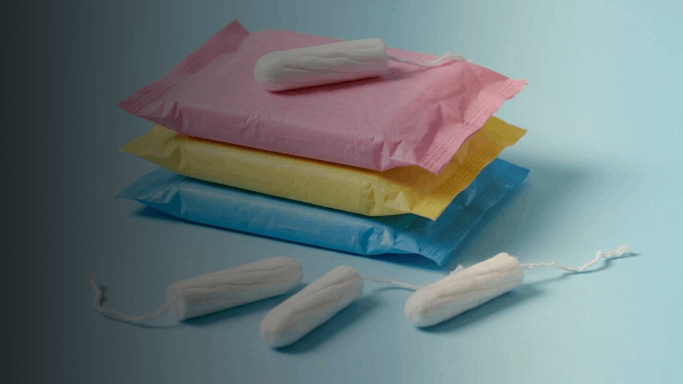
Sanitary pads are still subject to an effective Value Added Tax (VAT) rate of 11% as they are not yet included in the category of tax-exempt goods. This policy has drawn scrutiny from the House of Representatives (DPR) and the National Commission on Violence Against Women (Komnas Perempuan), who are urging the government to consider VAT incentives for menstrual products.
Selly Andriany Gantina, a member of Commission VIII of the DPR, requested the government to review the imposition of VAT on menstrual products, particularly sanitary pads, as it is deemed to increase women's economic burden in meeting their reproductive health needs.
Selly stated that the government should consider the possibility of excluding menstrual products from being subject to VAT or providing a VAT Borne-by-Government facility.
According to her, menstrual products are an essential and unavoidable necessity for women; therefore, the government must pay attention to the affordability and access to these products.
"Menstruation is a natural biological process that cannot be avoided. Therefore, the need for menstrual sanitary products is not a discretionary need that can be postponed," Selly said in Jakarta on Tuesday (Nov 3, 2026).
Gender Bias
The Vice Chairperson of Komnas Perempuan, Dahlia Madanih, assessed that the taxation of menstrual products reflects gender bias because it fails to consider the specific needs of women.
She highlighted the imposition of VAT on menstrual products, commonly known as the tampon tax or period tax. According to her, the policy needs to be reviewed by considering the principles of gender equity and the fulfillment of human rights.
"The state should present policies that ensure women's access to reproductive health needs, rather than adding an economic burden to an unavoidable biological necessity," Dahlia said in a press release in Jakarta, quoted on Monday (Nov 9, 2026).
Dahlia said that the taxation of menstrual products is also closely linked to period poverty, which refers to limited access to adequate menstrual products, sanitation facilities, clean water, and information on menstrual health due to economic and social barriers.
According to her, low-income women are the most vulnerable group facing this issue because the need for menstrual products is routine and unavoidable.
The need for menstrual products is not limited to using sanitary pads during menstruation. These products are needed by women in other reproductive conditions, such as postpartum recovery, experiencing other forms of bleeding, or following a miscarriage.
Therefore, the affordability of menstrual sanitary products is a crucial part of fulfilling women's reproductive health rights.
Selly added that the impact of imposing VAT must be viewed from the perspective of those who ultimately bear the economic burden, not solely on whether the tax is specifically levied on women.
"Assessing a tax policy is not enough by merely looking at its target of imposition, but it must also consider the party bearing the economic burden," she stated.
Balancing Revenue and Equity
In addition to requesting a VAT review, Selly urged the government to strengthen the gender perspective in formulating fiscal policies.
According to her, taxation policies should not only consider potential state revenue but also their impact on fulfilling basic needs and women's quality of life.
She asked the government to guarantee access to proper menstrual products for vulnerable groups, including women from low-income families, informal workers, persons with disabilities, and school-aged girls.
Such efforts, she argued, need to be integrated with the provision of sanitation facilities, access to clean water, reproductive health services, and education on menstrual health.
Selly also encouraged the Ministry of Women's Empowerment and Child Protection to strengthen coordination with the Ministry of Finance as well as related ministries and agencies so that women's needs become a key consideration in formulating national policies.
She emphasized that government revenue remains essential to financing development and public services. However, fiscal policy must also uphold the principles of social justice, particularly for vulnerable groups with essential and unavoidable needs.
Thus, the review of VAT on menstrual products is expected to consider not only state revenue but also the affordability of reproductive health needs and equitable access for all women.
Sanitary Pad VAT Provisions
The Directorate General of Taxes (DGT) of the Ministry of Finance explained that sanitary pads traded in Indonesia are still subject to an effective VAT rate of 11%.
Through its official Instagram account, @ditjenpajakri, DGT explained that sanitary pads are classified as Taxable Goods. The product is not included in the group of goods eligible for VAT exemption under prevailing laws and regulations.
The DGT Director of Extension, Services, and Public Relations Inge Diana Rismawanti explained that sanitary pads are categorized as non-luxury goods. Therefore, the VAT calculation uses a 12% rate, with a Tax Base (DPP) in the form of Other Values set at 11/12 of the selling price.
With this mechanism, the effective VAT burden on the purchase of sanitary pads is equivalent to 11% of the selling price.
DGT also asserted that this VAT is not a tax specifically aimed at women, nor is it a tax on menstrual activity. The policy is part of the VAT system on the consumption of goods applicable according to tax provisions.
Nevertheless, DGT understands that menstrual products, including sanitary pads, play a vital role in maintaining women's health, hygiene, and comfort.
Inge mentioned that any proposal to provide tax facilities for menstrual products needs to be assessed by considering the product's characteristics, tax provisions, its impact on society, and its implications for state revenue.
To date, according to DGT, no official study has been submitted to the government regarding the proposed VAT exemption on sanitary pads.
Also Read:
Finance Minister Assures Interbank Transfers Not Subject to VAT
Digital VAT Collection Expanded, 30 Banks and Fintechs Involved
2027 Tax Incentive Package: Income Tax, Tax-Free Threshold, VAT
Writer: Fiorentina Renata Trixie | Editor: Thomas Rizal
