
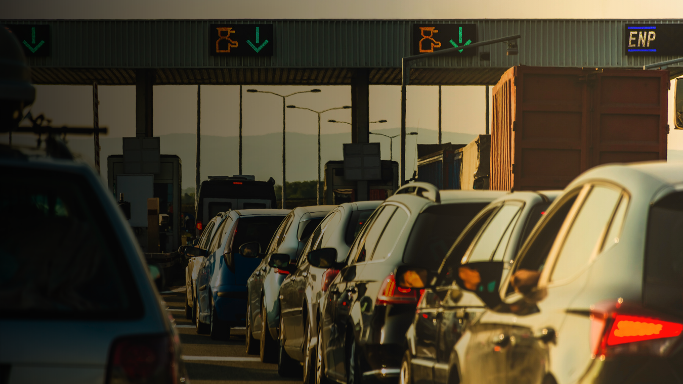
Over the past few decades, Indonesia’s toll road network has expanded at an impressive pace, both in total length and in the number of operational segments. It is no surprise that toll roads have become one of the country’s fastest-growing forms of transport infrastructure.
By 2025–2026, Indonesia’s toll road network will have surpassed 3,100 kilometers, spanning major islands such as Java, Sumatra, and Kalimantan. This growth reflects the government’s ongoing push to improve national connectivity through accelerated infrastructure development.
The number of operational toll segments has also continued to rise. Today, roughly 75-76 segments are in operation, managed by dozens of toll road companies. This emphasizes the pivotal role of private-sector participation, particularly through public-private partnerships (PPPs).
Java still dominates, with more than 1,800 kilometers of toll roads, which is unsurprising given its dense population and high economic activity. Meanwhile, development outside Java, particularly in Sumatra and Kalimantan, is being actively encouraged to support more equitable growth.
Indonesia’s first toll road, the Jagorawi route, began operating in 1978. Since then, development has grown rapidly, especially over the past decade, placing Indonesia among ASEAN countries with the longest toll road networks.
Looking ahead, the government has set an ambitious target to expand the network to approximately 17,685 kilometers between 2025 and 2040. This signals that toll roads will remain central to Indonesia’s transportation strategy.
Are Toll Roads Subject to VAT?

From a tax perspective, toll roads are clearly revenue-generating activities, with users paying toll tariffs for access. As such, toll road operations fall within the scope of various tax obligations, including income tax, value-added tax (VAT), and certain regional taxes.
In principle, toll road services can be subject to VAT. Article 4A of the VAT law does not list toll road services among those exempt from VAT, meaning they qualify as taxable services.
However, in practice, there are currently no detailed implementing rules governing the application of VAT to toll road services. Thus, while the legal basis exists, the mechanism for collection has yet to be formally established.
A Brief History of VAT on Toll Roads

The idea of imposing VAT on toll road services is not new. In 2015, the government issued the Director General of Taxes Regulation Number PER-10/PJ/2015, which sets out procedures for collecting VAT on toll road services. Under this rule, toll road operators were required to charge 10% VAT on their services.
But the policy was short-lived. Just one month later, the government revoked it through the Director General of Taxes Regulation Number PER-16/PJ/2015. After that, the idea of imposing VAT on toll road services largely faded from discussion for nearly a decade.
The Toll Road VAT Debate Returns

After years of silence, the topic resurfaced in 2026 as part of the Directorate General of Taxes’ 2025–2029 strategy. The proposal intends to broaden the tax base and increase state revenue.
At its core, the policy is grounded in the principle of tax neutrality. In other words, all consumption of goods and services generally should be taxed unless explicitly exempted. Applying VAT to toll roads would, in theory, make the tax system more consistent and comprehensive.
That said, the proposal raises several concerns. One issue is the potential increase in toll tariffs, which could ultimately be passed on to road users, both individuals and businesses.
Furthermore, there are also concerns about how such a policy might affect investment in infrastructure, a sector that has long relied on regulatory certainty to attract private capital.
Toll Road Taxation Around the World

Globally, there is no single approach to taxing toll road services. Some countries apply consumption taxes, such as VAT or GST, directly to toll tariffs. Others, however, choose to exempt tolls in order to keep transportation costs affordable for the public.
In parts of Europe, toll fees often already include VAT. In contrast, several Asian countries do not impose consumption taxes on tolls. These differing approaches show a broader policy balance between generating revenue and maintaining the accessibility of public infrastructure.
The renewed discussion around VAT on toll road services accentuates a complex policy trade-off. On one hand, the government is looking to strengthen revenue by expanding the tax base. On the other hand, it must carefully consider the substantial implications for infrastructure development, investment, and public affordability.
Any future policy in this area will need to be carefully designed, taking into account international practices as well as Indonesia’s own economic conditions.
Read more:
https://ideatax.id/articles/all-you-need-to-know-about-income-tax-on-bond-interest
https://ideatax.id/articles/navigating-tax-payments-in-the-new-coretax-system
https://ideatax.id/articles/article-26-withholding-tax-on-foreign-taxpayers
